

There are a lot of decisions to make when selling your home.
But none matters more than the real estate agent you choose.
How do I know?
Because I chose the wrong agent when my wife and I sold our home.
It spent months on the market.
The process was stressful.
And we sold for less than we should have.
This was before I got into the real estate industry.
My biggest mistake was hiring the agent I liked the most (and believing his price).
Should you hire an agent you feel comfortable with?
Of course.
But likability doesn’t mean they’ll get you top dollar or hit your desired timeline.
I’ll show you what to look for (and what to avoid) so you know what can.
Follow these steps to help you choose the right agent.
1. Find real estate agents worth considering
Taking the first step is where some sellers get uneasy.
Either they’re not sure when to reach out.
Or they don’t want the hassle of talking to more than one agent.
But the margin for error is small when you’re selling your house.
That’s why you should consider at least two or three listing agents before you decide.
If you’re not sure where to look, here’s a list of the best places to find an agent.
Referrals, open houses, and local brokerages are a start.
Look at the agent’s online presence
Researching an agent online before you meet can help you rule out weak candidates fast.
So once you have a short list, Google their full name plus “real estate agent” or “Realtor.”
And then look for the following:
- Reviews: Don’t just read the glowing reviews. Look for negative ones and any patterns that would show up during your sale, like poor communication or being disorganized. One bad review may not mean much, but the same issue mentioned repeatedly is a red flag.
- Listing presentation quality: Pull up a few of the agent’s listings and look at the photos and property descriptions. If the presentation looks sloppy, there’s a good chance that’s what your listing will look like too.
- License verification: Do a quick state license lookup to confirm the agent is active and in good standing, and to see any disciplinary history. Google “[State] real estate license lookup” and search their name.
Pro tip: Don’t confuse paid designations with real credentials when you’re browsing agents online. For example, being labeled a “Premier Agent” on Zillow is paid placement. That doesn’t mean the agent is bad, but it does mean you should treat it as advertising and dig deeper.
2. Evaluate agents in a listing consultation
A listing consultation is usually done at your home so the agent can see the property.
But it’s also your chance to see what it will feel like working together.
You can do that by asking important screening questions.
Request seller references: Online reviews help, but references let you hear the details that never make it into a testimonial. Ask what it was like during the stressful parts of the process and how the agent handled it. Use that feedback to confirm their working style matches what you’re looking for.
Confirm who you’ll work with day to day: Some agents work on teams, while others work solo. Neither is automatically better, but you should know who your day-to-day contact will be. You don’t want to hire one person and get handed off to someone you’ve never met.
Review their process before and after your home hits the market: Do you want a hands-on agent who drives the process? Or do you prefer more control with defined checkpoints? Either way, they should be able to walk you through what happens before and after your home hits the market. You should know what they’ll handle, what you’ll handle, and how you’ll stay aligned.
Map out how showings and open houses will be handled: If you’re living in the home, you need a plan that works with your schedule, especially if you have pets, kids, or are working from home. If the house is vacant (or you’re out of town), you’re confirming they’ll take ownership of access and keep the listing easy to show.
Confirm availability for nights and weekends: Many buyers tour homes after work and on weekends, which is when their agents will sometimes reach out to yours. A missed call or delayed reply can cost you momentum with a qualified buyer. Decide how much availability you want so you’re on the same page.
3. Avoid agents with a track record of dual agency
Dual agency happens when the same agent represents both the seller and the buyer.
That situation creates a conflict of interest that can quietly work against the seller.
That’s why an agent’s track record of dual agency is one of the most important things you should look for.
Here’s a real example I experienced that shows why.
Why dual agency matters when choosing an agent
Some of the shadiest moves can cost sellers a lot of money.
I once represented a buyer who wanted to submit an offer on a home.
So I called the listing agent to gauge interest.
He told me there were “other offers.”
I followed up the next morning to ask if those offers had already been presented to the seller.
No reply to my texts, so I called again.
He said they hadn’t been presented yet.
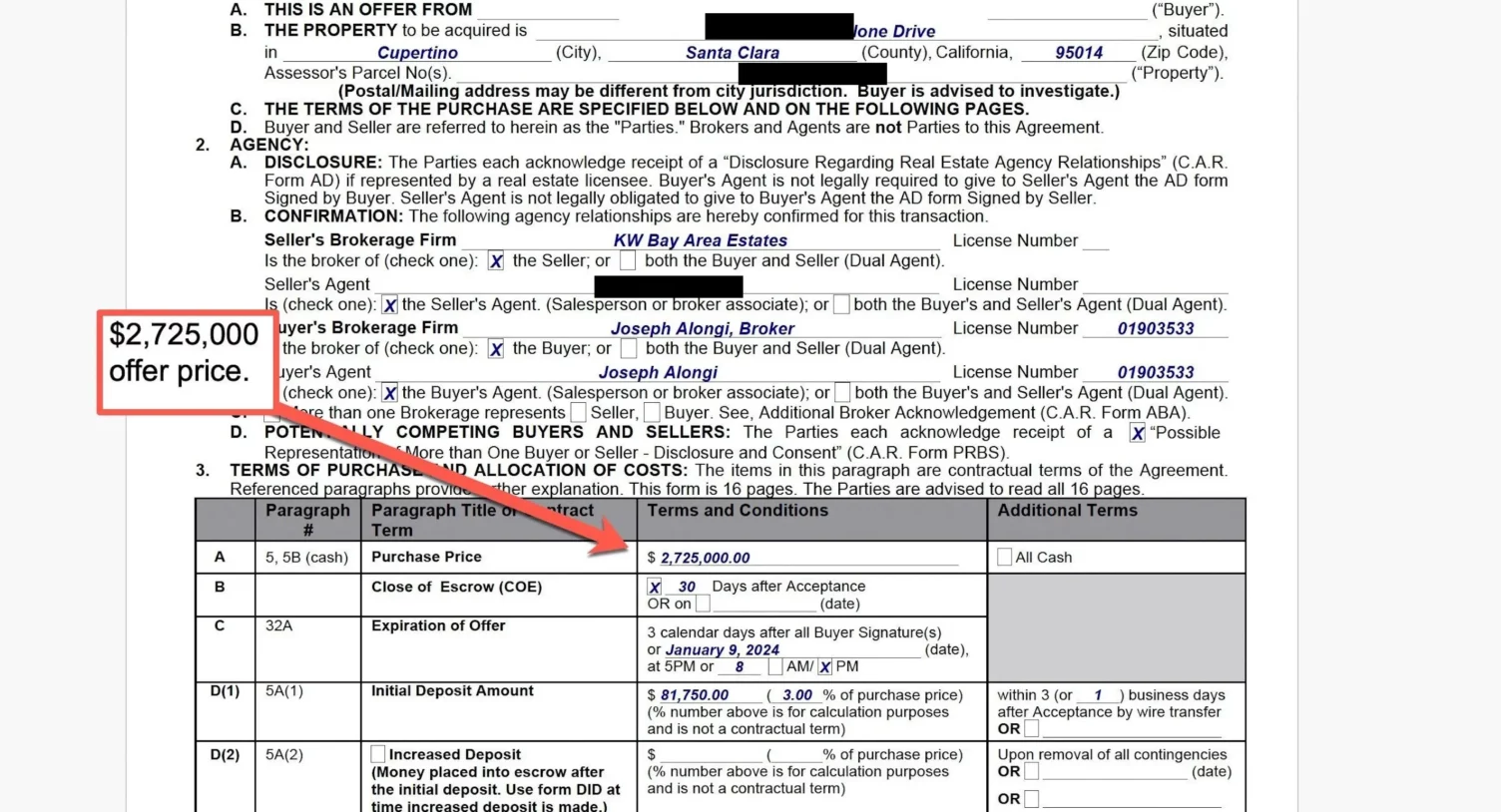
So I submitted my client’s non-contingent offer at $2,725,000, with an expiration of 8 pm that night.
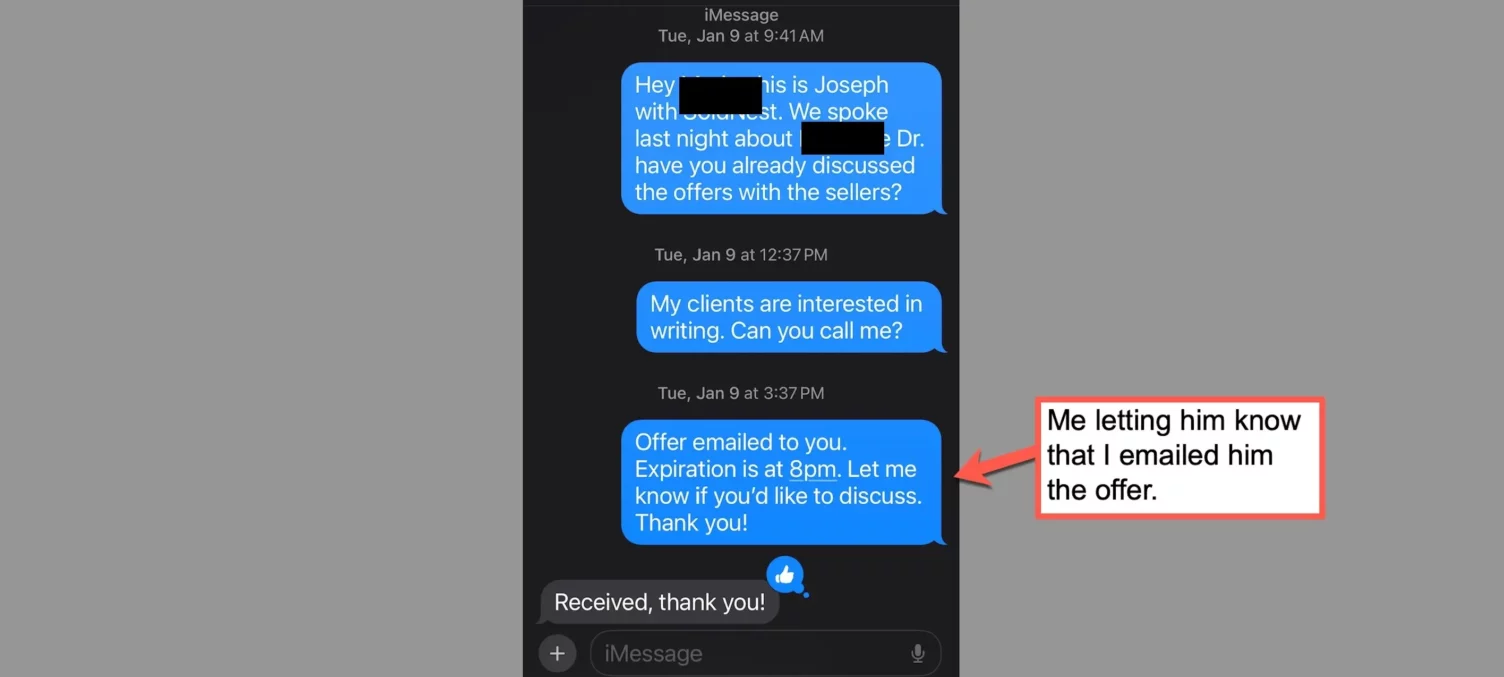
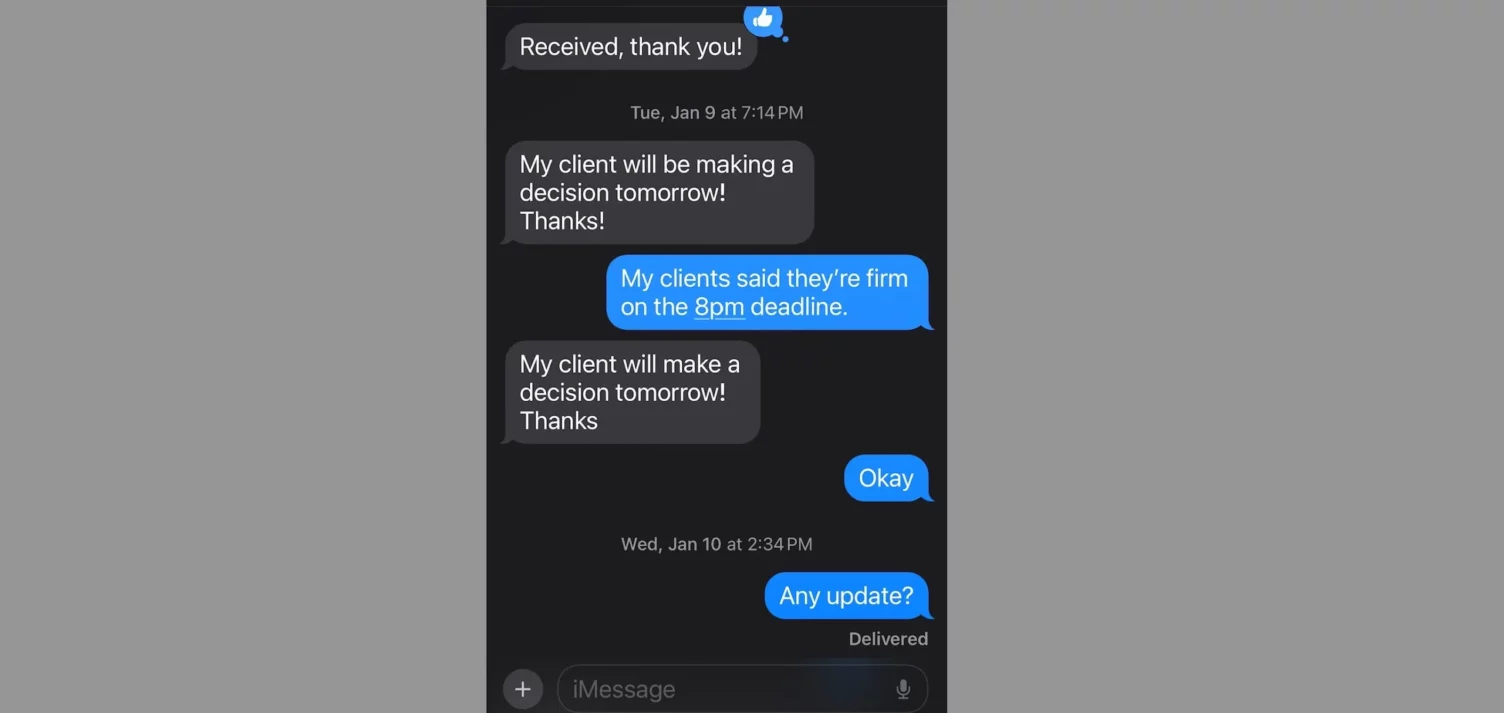
At 7:14 pm, he texted that the seller would be making a decision the next day.
My buyers agreed to extend.
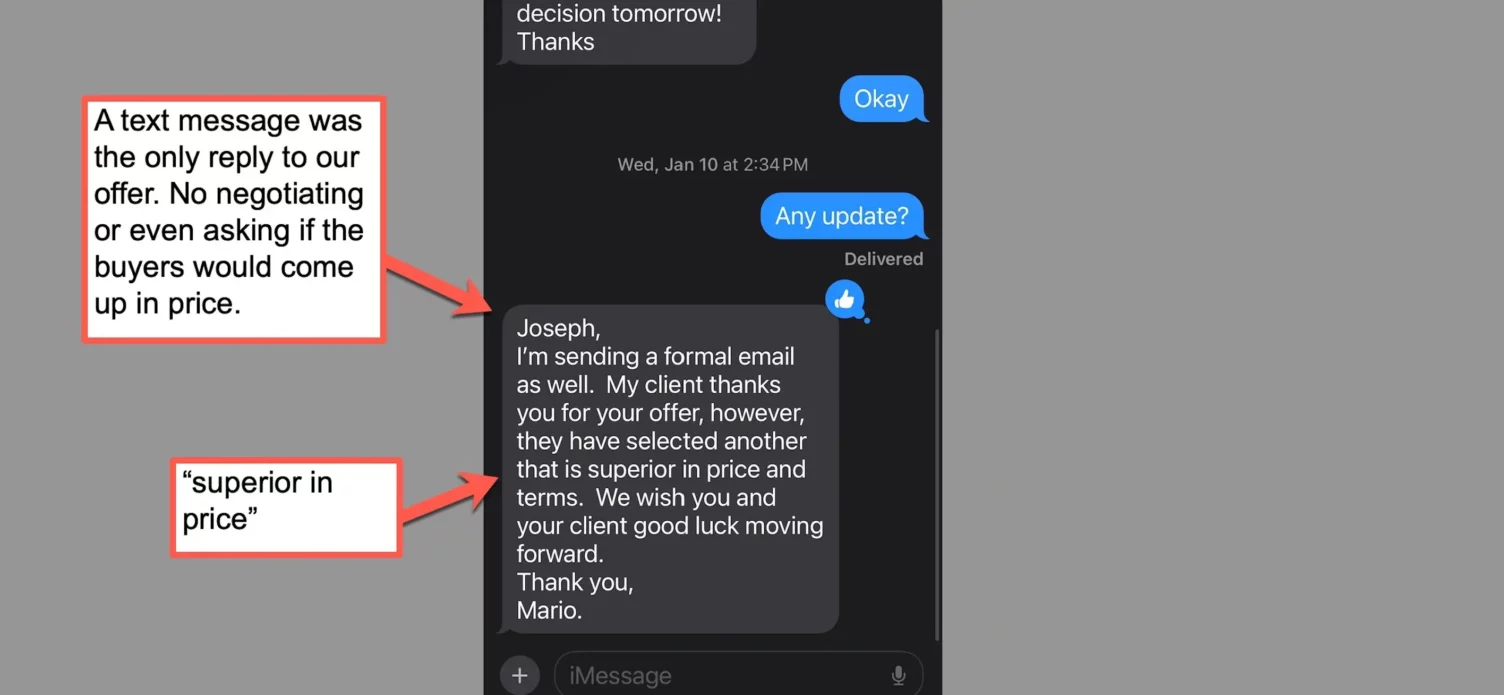
The next day, he texted that the seller accepted another offer that was “superior in price.”
Here’s why this is important.
The home ultimately closed at $2,730,000, only $5,000 higher than the non-contingent offer my clients submitted.
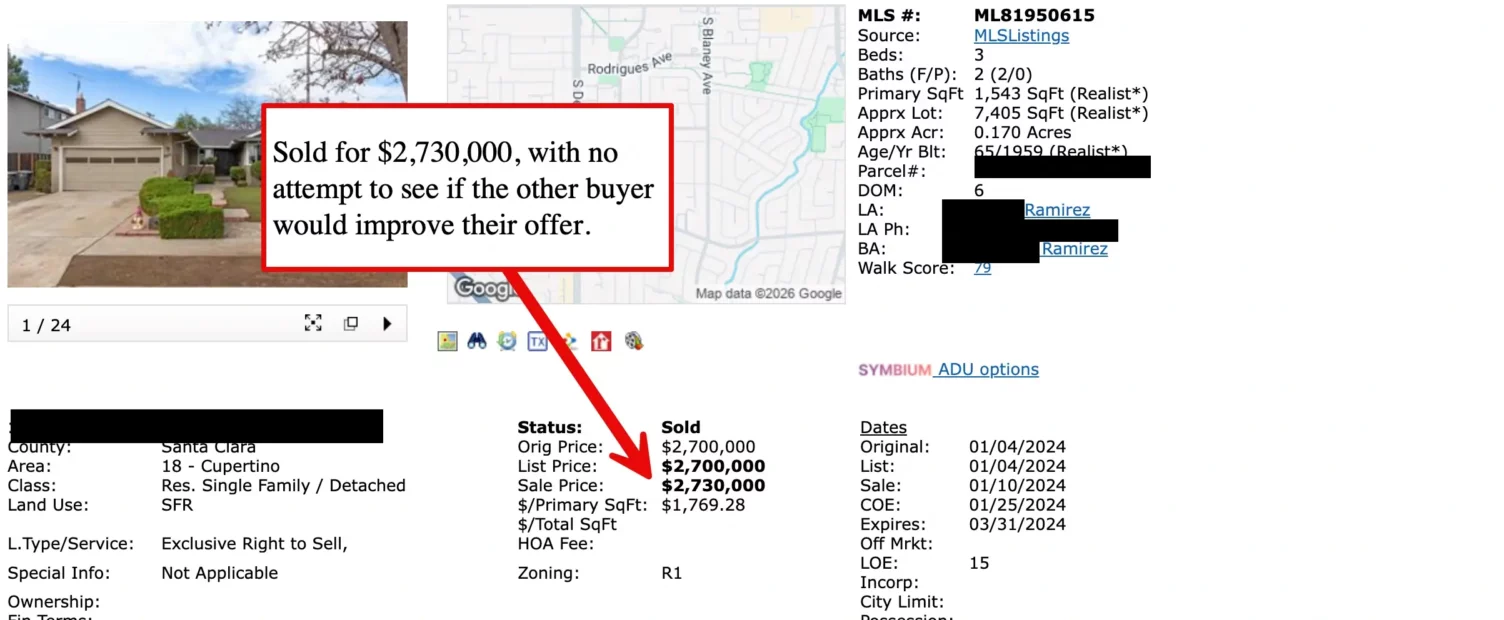
My buyers told me they were willing to increase their price substantially (up to $2,790,000) if it came down to it.
That’s $60,000 higher than what the seller accepted.
But the agent made no attempt to see if my clients would increase their offer.
This is why an agent’s track record of dual agency is critical.
Agents who regularly represent both sides have a different default setting.
They’re more likely to prioritize earning two commissions from one transaction above the seller’s best interests.
And that mindset can spill over into everything else they do when selling your home.
4. Match the agent to your selling situation
An agent can be great at selling homes and still not be the right fit for you.
How?
Your reason for selling.
Some sales have more moving pieces, tighter timelines, and more ways to get delayed at the finish line.
So don’t just look for an agent with experience in your area.
Look for one who has experience with your situation.
- Relocating out of the area: You need someone you can trust to hand the keys to. They should commit to managing access, meeting vendors, and handling last-minute decisions without delays.
- Selling and buying locally: Timing matters when you’re trying to line up two transactions. An agent with experience here can help you plan for overlap, gaps, and what happens if one side moves faster than the other.
- Inherited, trust, or probate sale: These sales come with extra paperwork and more logistics. And when multiple decision-makers are involved, it’s easy for the timeline to drag. You want an agent who knows the ins and outs and is used to keeping the process moving without adding stress.
- Rental property: Tenants, notice requirements, and showing access can get complicated quickly. The agent should know how to keep the listing easy to show without creating conflict or violating local notice rules and tenant laws.
- Divorce: An inexperienced agent can accidentally make a divorce situation harder. You want someone neutral who can reduce friction and keep the process moving.
- Health concerns: Prioritize a low-stress, flexible process that doesn’t require you to be “on call” for the sale.
- Financial pressure (job loss or foreclosure risk): Time and privacy matter more here than almost any other situation. You need an agent who can move fast, price it right, and keep the plan realistic so you don’t waste weeks “testing” a number the market won’t pay.
An agent can still be capable even if they haven’t handled your situation before.
But you risk a lot of needless friction if your sale is their learning curve.
5. Don’t let an agent “buy your listing”
Some agents are very good at convincing sellers they can get an unrealistically high price.
In real estate, that’s called “buying the listing.”
Here’s what usually happens (and what happened to me)…
A seller gets a few pricing recommendations, usually backed by a comparative market analysis (CMA).
And one of those agents pitches a number that’s higher than the rest.
So the seller goes with that agent.
Showings slow down because buyers compare the asking price to similar homes nearby.
Then the agent comes back and says the market has “spoken,” so the seller should reduce the price.
The end result?
A stale listing and a final sale price that’s lower than it would have been with a competitive list price from the start.
And the seller still pays a commission to their agent.
A big number can sound great, but don’t confuse confidence with accuracy.
Your home is worth what a qualified buyer is willing to pay.
And if the market supports a premium?
An experienced real estate agent with a reputable track record will get it for you.
6. Confirm availability and support
One thing sellers often overlook is an agent’s capacity.
If they’re juggling too many clients at once, your listing can start to feel like it’s waiting its turn.
So make sure they have the time to give your sale the attention you want.
Get clarity on how many active clients they’re working with right now.
There’s no perfect number.
As a general benchmark, more than seven active clients can mean they’re stretched thin.
But the number isn’t the point.
The real issue is whether their workload matches the level of support you expect.
So don’t stop at “I’m not busy.”
Get specific about how they’ll keep you a priority when things get busy.
Reliability is one of the things that makes a good agent.
That’s why sales volume alone shouldn’t drive your decision.
In many cases, high volume comes from taking on more clients at the same time.
That can work if the agent has a strong support system in place.
But important details can fall through the cracks if your listing is one of many.
An experienced agent with enough capacity to stay on top of your sale might be the better option.
7. Make the final decision
If one agent clearly stands out, trust the process that got you here.
Still torn between two?
Don’t replay their pitch. Replay their precision.
Who was more transparent about price and trade-offs?
Which agent caught the small details that changed the plan?
Who sounded ready to run the sale the way you expect?
When two agents look similar on paper, the tiebreaker is execution.
So select the agent who:
Shows pricing discipline: You weren’t pitched an inflated number. Instead, they backed the list price with comps, current market conditions, and real buyer behavior.
Feels more trustworthy: They were straightforward, and their track record shows they usually stay on one side of the deal instead of representing both parties.
Made the next steps predictable: They aligned with your expectations up front, then explained the plan and how it changes if early interest is slower than expected.
Has the bandwidth for your sale: They can support the level of communication and follow-through you want, without your listing getting pushed behind other clients.
Once you’ve made your choice, let the agent know you’d like to hire them.
They’ll walk you through the next steps and review the listing agreement before signing.
Final thoughts
The real estate agent you choose matters.
Your decision will affect how quickly your house sells and how much money you take home.
But the hard part is not finding an agent who sounds good.
It’s finding one who is actually qualified, and whose incentives stay aligned with yours.
Our no-cost, no-obligation service makes it easy to get matched with a top local agent who checks every box.
Learn how it works and connect with an agent best-qualified to sell your home for the highest possible price.